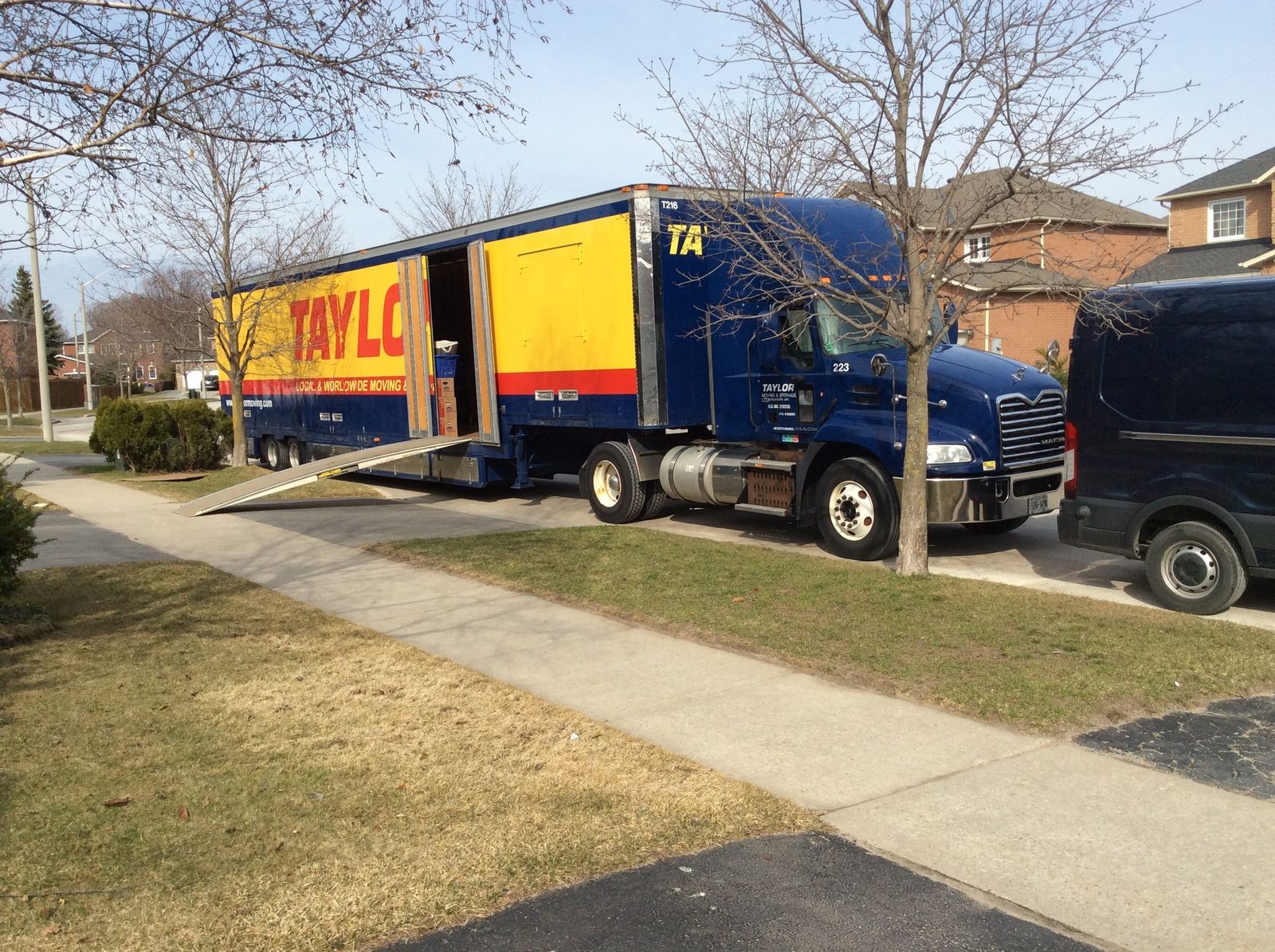
I started in this industry sweeping out a garbage trailer. Every job after that — loading trucks, running crews, eventually running the business — happened inside an industry everyone told me was allergic to technology. "Moving will never be tech-driven" wasn't a joke people made. It was a genuine, widely-held belief, and for a long time, the industry proved it right.
What I actually saw, running that business, was different: real support — the kind that keeps a family from feeling lost, that prevents a damage claim before it happens, that helps someone actually decide what to keep and what to let go of — was locked behind expensive paywalls. Corporate accounts got it. Individual, self-paying families mostly didn't. Everyone else competed on the same three things: price, availability, and a truck that showed up on time. That's commoditization. It's also a losing game, because there's always someone willing to charge less.
Before this was a product, it was something I kept running into directly. Running an international moving operation, I could see how much value was sitting inside every single move that we simply weren't delivering — obligations nobody was tracking closely enough, damage that guided packing could have prevented outright, a family we lost track of right when they needed us most. None of that was a technology problem. It was a value problem. We were charging for a move and delivering exactly that: a move. Nothing more.
We built the first version of what's now Threshold to solve exactly one problem: give our own coordinators a single, ordered view of everything a relocating family still had to do. It worked. Obligations stopped slipping through the cracks. That's when the real idea clicked — this industry wasn't just underserving people on price, it was underserving the actual scope of what a move is. We weren't just moving households. We were moving people's entire lives — their routines, their sense of place, their sleep, their sense of what home even means for a few disorienting months. So we kept building: relocation obligations for leaving one country and arriving in another, real packing help for people who couldn't justify paying full-service prices, appraisal tools to help someone actually decide what's worth keeping, selling, or letting go. The list kept growing.
What makes this different from a typical vendor pitch is simple: every module in this suite was built to solve a real operational problem for a real moving company first — ours — before it was ever offered to anyone else. And somewhere along the way, I realized the software wasn't just adding value back into a move — it was solving the commoditization problem, too. Every tool in this suite does the same two things: it gives a family real support they couldn't get anywhere else, and it gives you a way to close more of both kinds of business — corporate and COD — while lifting your margin, without adding a dollar of overhead. That's the actual test every module has to pass before it ships.
Everything that used to be locked behind an expensive corporate contract or a premium price tag is available now — to any mover, at any size, for any client who's paying out of their own pocket just as much as one who's being relocated by a Fortune 500 company. That's the whole idea behind Wayfinder: the evolution of an industry that started, for me, with a broom and a garbage trailer, into something that finally treats every move — and every family living through one — like it deserves more than a truck and a price quote. We're not done. We'll keep building as the business grows.
That business is a FIDI/IAM network member operating at a high level across corporate, cross-border, long-distance, and international moves — and today we do business with 85% of Canada's Relocation Management Companies. That relationship shapes the suite directly: the obligation logic, the data structure, and the reporting each module produces are built to hold up against the same standards an RMC already expects from us, whether the move in question crosses a border or just crosses the country. See how that shows up directly in our relocation management software.